Catalyst 2026
Five-Day Workshop on Advanced Sustainable Materials, Energy, AI, CFD and DFT
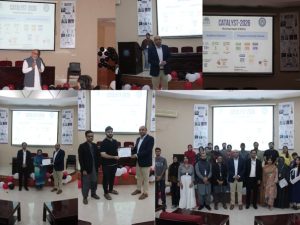
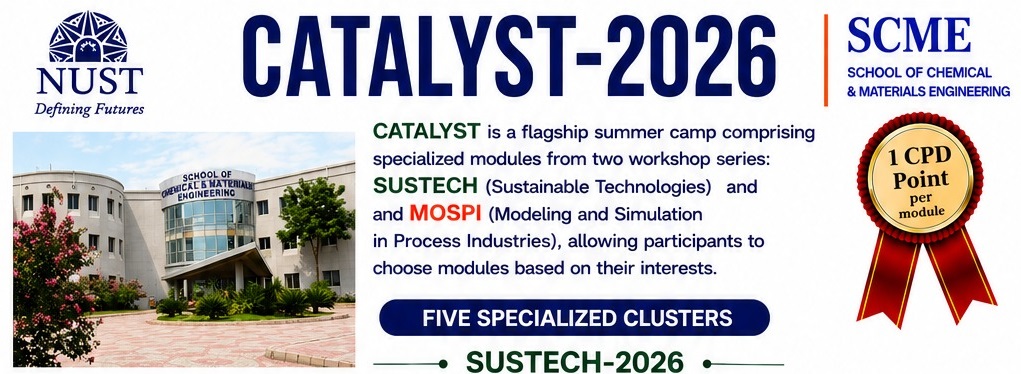
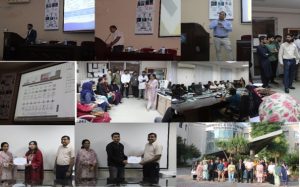
The Catalyst 2026, a five-day technical workshop, was successfully organized at the School of Chemical and Materials Engineering (SCME), NUST, from 31st August to 4th September 2026. The workshop assembled faculty, researchers, students and experts from academia to expose participants to cutting edge research, advanced experimental techniques and computational tools used in current chemical and materials engineering research.
The workshop was organized in the form of five thematic clusters with gradual progression of expert lectures, hands-on learning, technical discussions and panel sessions.
Day 1: PACE (Packaging, Advanced Materials and Coatings & Environmental Materials) focused sustainable and advanced materials such as nanocellulose from biomass materials for high-performance packaging, membrane technology, fire-proof coatings, synthesis of nanoparticles and advanced materials characterization using SEM and XRD. A panel discussion was held to discuss the challenges and future directions in sustainable materials and their applications.
Day 2: EASE (Electrochemistry and Advanced Energy Storage) covered emerging technologies in electrochemistry and energy conversion, with sessions on supercapacitors, electrolysis, organic electrodes, triboelectric nanogenerators, and 2D materials for energy storage. The participants also got hands-on experience with an electrochemical workstation and were followed by a discussion with the expert panel on opportunities and challenges in advanced energy technologies.
Day 3: AI, First-Principles Modeling, Data Science and Python Tools introduced participants to the rapidly developing role of artificial intelligence and data-driven approaches in chemical engineering. The sessions covered AI applications, first-principles modeling, machine learning using MATLAB/Python, data handling and visualization, and development of machine learning models using practical engineering examples.
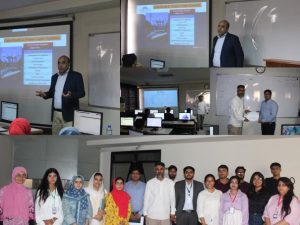
Day 4: CFD Fundamentals and Applied CFD gave the participants an introduction into the field of computational fluid dynamics: the governing flow equations, the computational meshing, the boundary conditions, and the simulation of simple systems. In the afternoon session, industrial applications of CFD in heat and mass transfer were discussed with hands-on modelling and case discussions.
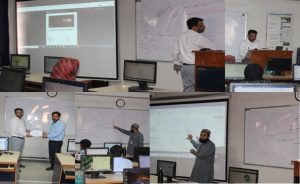
Day 5: DFT and Surface Chemistry introduced participants to density functional theory (DFT) and computational techniques to understand surface reactions and adsorption/desorption in catalysis. The use of VASP for computational modeling of catalytic systems has been emphasized.
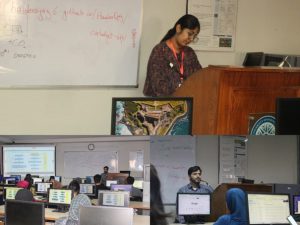
One of the main aspects of Catalyst 2026 was its focus on learning-by-doing activities. Hands-on experience with advanced characterization and experimental facilities, electrochemical instrumentation, machine-learning tools, CFD simulations, and computational modeling were also offered. The workshop also offered a great opportunity to engage with experts through panel discussions and technical exchanges. The workshop also invited speakers from NUST and international academic institutions, such as Universiti Teknologi Malaysia and University of Nottingham, UK, which gave a national and international outlook on the research and technological advancement going on in the world. In general, the establishment of a multidisciplinary platform for the exchange of knowledge, practical learning and networking in research was successful for Catalyst 2026. The workshop underscored the emerging convergence of advanced materials, sustainable technologies, electrochemistry, artificial intelligence, computational modelling and catalysis to solve some of the current engineering and technological problems. The organizing team hopes that this effort will be continued with future training and joint research programmes, as well as with a better connection between academia and industry.